Grades 1 - 3

Recording:
Liberty University Wind Symphony Dr. Stephen Kerr, Director |
FULL BLAST! was premiered by Dr. Stephen Kerr and the Liberty University Wind Symphony at the 2021 Virginia Music Educators Association Conference.
Program Notes: FULL BLAST! follows the exciting journey of a rocket launching into space. This piece is very much within the performance reach of Middle School bands, and may be an excited ride for younger band members learning to perform a bit of syncopation. With a minimalist approach, this short journey allows the band members to perform melodies and supportive material throughout the work. Length: 1:45 Grade: 2 |
|
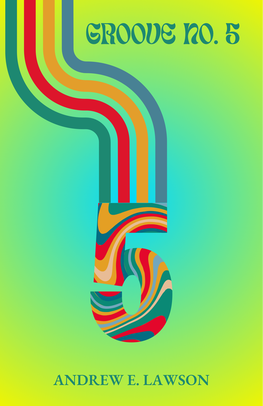
Groove No. 5 was commissioned in 2023 by Dr. Jeffrey Phillips, professor of trombone and commercial brass at Belmont University.
Program Notes: Commissioned in 2023 by Dr. Jeffrey Phillips, Groove No. 5 represents the joy we find in moments of everyday life, such as (in the words of Dr. Phillips) dogs and cheap dollar-store flip-flops. This lively piece contains a joyous and uplifting melody in 7/8, a warm, peaceful chorale, and closes with another iteration of the dancing, slightly off-balance melody from the beginning. Length: 3'45'' Grade: 3 |
|
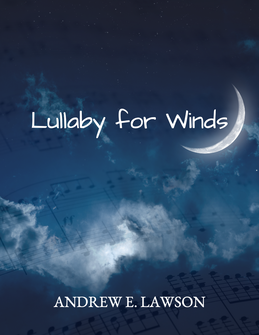
Lullaby for Winds was commissioned by the Portland East Middle School Band (Portland, TN) and their director, Jim Geiger, in the fall of 2022. This lyrical selection contains two chorale-like melodies, both presented first by woodwinds and then later by the full ensemble.
- Program Note by Andrew E. Lawson Length: 3'28" Grade: 2 |
|
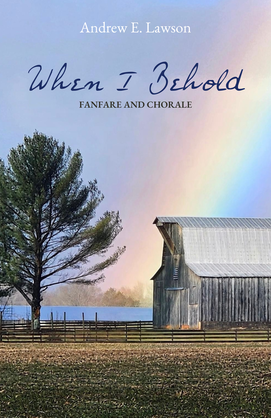
Commissioned by the Tri-Lakes Band Director’s Association to commemorate the 50th Tri-Lakes Honor Band Clinic in 2024, When I Behold, takes its title and inspiration from a poem written in 1802 by William Wordsworth.
My Heart Leaps Up by William Wordsworth My heart leaps up when I behold A rainbow in the sky: So was it when my life began; So is it now I am a man; So be it when I shall grow old, Or let me die! The Child is father of the Man; And I could wish my days to be Bound each to each by natural piety. This fanfare contains mostly original material, with brief references to For the Beauty of the Earth, a hymntune by Folliot S. Pierpoint written in 1864. The opening statements of heralding brass soon subside as the woodwinds present a pastoral choral, evoking images of vast fields. Soon, the heralding returns in a final crescendo to the end! - Program Note by Andrew E. Lawson Length: 3' Grade: 2.5 |
|
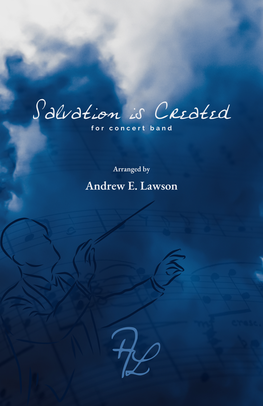
Salvation is Created, originally written as a choral work, was composed by Pavel Chesnokov in 1912 as the fifth in his Ten Communion Hymns (Op. 25). Although he never heard his own composition performed, his children had the opportunity following his death. Scored for six voices (SATTBB), the work is a communion hymn based on a synodal Kievan chant melody and Psalm 74. The original text reads: Salvation is made in the midst of the earth, O God. Alleluia. Following an arrangement by Bruce Houseknecht in 1957, Salvation is Created became a standard work in wind band literature.
Length: 3'10'' Grade: 3 ***This arrangement features full instrumentation with careful doubling to accommodate ensembles of varying sizes and instrumentation. |
Grades 4+
Recording:
Roane County High School Wind Ensemble Zack Williamson, Director |
Fantasía Española was written for Zack Williamson and the Roane County High School Band in Kingston, TN during the summer of 2019, and was premiered by the Roane County High School Wind Ensemble in December of 2019.
Program Notes: The Phrygian mode is one of my favorite modes in music. In Fantasía Española you will hear a slightly altered form of the traditional mode, using a lowered second and raised third. It is the fifth mode of the harmonic minor scale and can be heard in music from all over the world. Fantasía Española, translated as Spanish Fantasy, is inspired by traditional Spanish music and culture, but with a twist of my own. Length: 4 minutes Grade: 5 |
|
Exsultate is a jubilant fanfare based on the text of Wolfgang Amadeus Mozart's Exsultate, jubilate, the first line of which translates to "Rejoice, resound with joy!". This invigorating fanfare combines bold, stately themes in the brass, with woodwinds bursting forth in a flurry of energy.
Exsultate was premiered by Alex Kaminsky and the Vandercook College of Music Symphonic Band on December 22, 2023, at the 2023 Midwest Clinic in Chicago, IL. Length: 2'40'' Grade: 5 |
Recording:
Liberty University Wind Symphony Dr. Stephen Kerr, Conductor |
The Weight of Glory was commissioned by Dr. Stephen Kerr and the Liberty University and premiered on March 18, 2021. The piece was written during the height of the COVID-19 Pandemic as a response to everything happening in the world.
Length: 10 Grade: 6 Program Notes: While it is often difficult to describe the origins of a composition, the inspirations for “The Weight of Glory” come from a passage of scripture, 2 Corinthians 4:16-18: “So we do not lose heart. Though our outer self is wasting away, our inner self is being renewed day by day. For this light momentary affliction is preparing for us an eternal weight of glory beyond all comparison, as we look not to the things that are seen but to the things that are unseen. For the things that are seen are transient, but the things that are unseen are eternal.” My personal experience with these verses is one of great hope and joy. My response is a great shout of praise and thanksgiving. The main theme, what I am calling the “Affliction” theme, has been used in a variety of ways - both in major and minor form as an expression of both the many pains that life brings and of the joy that still remains. This theme begins with solo clarinet and soon finds its way across the ensemble. Alongside this melody and others, the hymn tune "Ein Feste Burg", better known today as "A Mighty Fortress is Our God" was chosen to be the ultimate statement of hope, joy, and grandeur. Written by Martin Luther in 1529, “Ein Feste Burg” has gone through several changes over the last 500 years or so. I have chosen to use the original form of Luther’s melody as the basis for the closing of this piece. |
Recording:
UGA Wind Ensemble Dr. Jaclyn Hartneberger, Conductor |
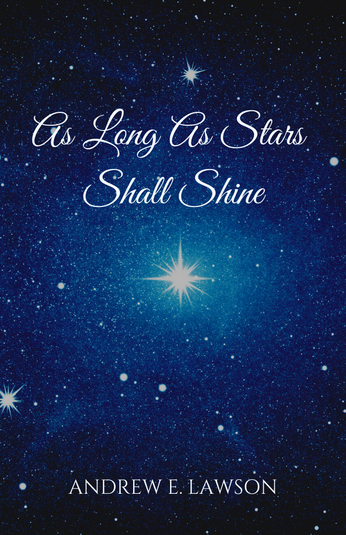
As Long As Stars Shall Shine has been written in honor and memory of Sarah DelBene, a close friend of mine and a student at UGA. The was premiered by Dr. Jaclyn Hartenberger and the University of Georgia Wind Ensemble on April 21, 2022.
Length: 14" Grade: 6 Program Notes: On December 2, 2021, one of my best friends, Sarah Delbene, suddenly passed away. We were all in complete shock. Sarah was a friend to everyone she met. She was a bright, shining star in every room she entered. In an instant, I was reminded of how delicate life is and how things can change at a moment’s notice. How do we deal with this - the loss of a friend or family member, especially when it is so unexpected? How does a composer tackle something like this? And why would a composer tackle something like this? In the following days, I was on social media reading some of the fond memories being shared about Sarah, and a comment stood out to me—this comment became the title of this piece, As Long As Stars Shall Shine. I soon went online and searched the phrase, finding that it was a line from the alma mater hymn at Baylor University, where Sarah had received her Masters Degree. At that point in time, I reached out to Sarah’s parents to ask if they would grant me their blessing in writing a piece to honor Sarah, and to try and capture some of the joy she brought into so many people’s lives. As I began writing, I realized that this music was meant to address, and had to address, a wider audience and tackle three different thoughts, presented in three movements: 1.Acknowledgement of Loss The first movement acknowledges loss of friends and loved ones. This begins with clarinets, soon followed by Flute, Euphonium, and Tuba solos with piano. This peaceful, still, calmness is then suddenly interrupted. The music wildly transitions into madness, a heart shattered by loss, a world unraveled by a sudden, devastating change. A more aggressive form of the original theme presented is heard from the brass. This is concluded by a setting of Nearer, My God, to Thee. 2.The Recollection of Memories The second movement represents all fond memories of those who have left us - the love and laughter remembered by all. A sense of adventure is in the air, soaring through our hearts and minds. The movement closes with an abbreviated statement of the original theme. 3.The Joy of Heaven Awaiting The third and final movement brings with it new joy of a saint gone home. This final movement is comprised of two hymns, Amazing Grace and Old Hundredth (Doxology), with hints of the original flute theme spread throughout. The final response of an earthly tragedy and a heavenly victory - a shout of praise and thanksgiving. As so many of us have experienced in our lives, the loss of loved ones, whether friends or family, is never easy and is often painful. We find ourselves saddened, angered, confused, depressed, in denial, and often reminiscent. We look back to remember our favorite memories - the happy, joyous moments. We recall stories of fun, adventure, thrill, and laughter. As Long As Stars Shall Shine is meant to convey the sense of hope, healing, and joy found in these memories. I hope that this music inspires every listener to take pause and reflect on those whom they have loved and lost. |